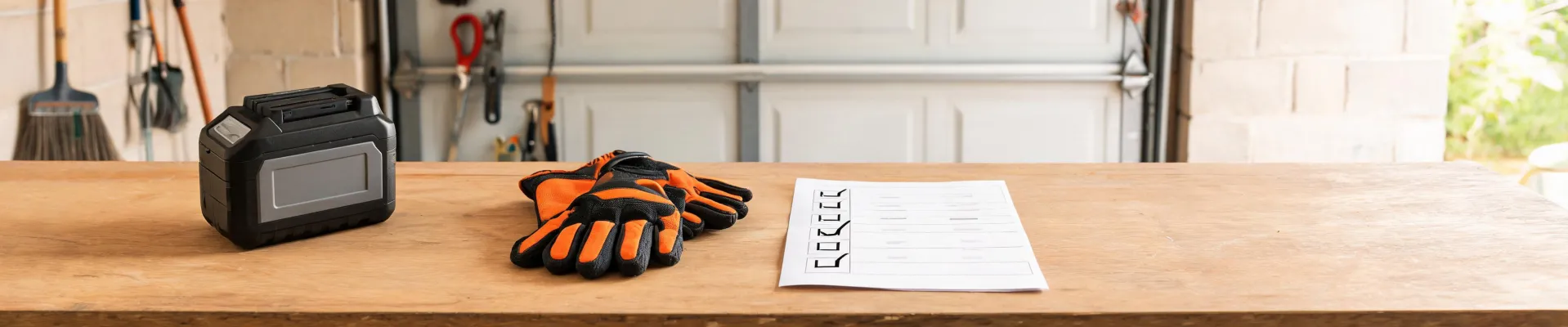
This is the part where most buying guides start with a spec table. I'm going to do it differently. If you're reading this, you've probably already compared EGO battery tools against everything else on the market. You know EGO makes mowers, chainsaws, trimmers, blowers, snow blowers, and pressure washers. The real question is: which setup makes sense for you?
I've been handling equipment purchasing for a landscape maintenance company for eight years. In that time, I've personally made and documented 14 significant mistakes, totaling roughly $13,500 in wasted budget. Now I maintain our team's buying checklist. Hopefully this helps you skip a few expensive lessons.
Before anything else, let's get one phrase out of the way: ego lifting meaning. In the gym, ego lifting means grabbing a weight you can't control because it looks good in the moment. In equipment buying, it's exactly the same. I once bought a bigger chainsaw than I needed because "bigger felt more professional." It wasn't. It was just heavier.
Three Kinds of EGO Battery Tool Buyers
I don't think there's a one-size-fits-all EGO setup. The closest thing I have to a universal rule is this: match the tool to the job, not to your ego. Beyond that, I see three different buyer scenarios.
- You're adding battery tools to an existing gas fleet. You want to know what to replace first and what to keep.
- You're starting a small crew. You need a foundation that won't turn into a money pit.
- You need one specific tool. You just want to know if an EGO chainsaw, pressure washer, or blower is the right answer.
Scenario 1: You're Keeping Some Gas, Adding EGO Battery Tools
This is the most common path, and honestly, it's the smartest one. You don't need to get rid of every gas tool overnight. Battery isn't a religion; it's a workflow choice.
Start with the tools that make you say "I hate this part of the day." For most crews, that's trimming and blowing. A battery trimmer doesn't vibrate like a gas trimmer. A battery blower doesn't need a pull cord after it's been sitting in the truck for ten minutes. Use those for a month, then decide whether you want to go further.
My rule of thumb: if a tool is used for less than 30 minutes at a time, battery is worth it. If it runs all day, gas still has a place. Both can live on the same truck.
Scenario 2: You're Starting a Small Crew
I have a soft spot for small operators. When I started, I couldn't get a dealer to return my calls for a small order. The one who did got my business later when we grew. Today's small order is tomorrow's fleet order.
The EGO 56V platform works well for a small crew because it gives you one battery system across a wide lineup. You can start with a mower, trimmer, and blower, then add bare tools as jobs show up. You don't need a fuel storage cabinet or a drawer full of two-stroke mix.
One mistake I made: buying full kits with batteries and chargers, every single time. I ended up with chargers stacked on a shelf while my crew shared the batteries. Check what's inside each SKU before you order. It sounds obvious, but I learned that after about $650 in extra chargers.
Small doesn't mean unimportant—it means potential.
Scenario 3: You Only Need One Tool
Okay, let's talk about the question that gets searched more than any other in our shop: 038 chainsaw. I know a lot of crews still run an 038 chainsaw, and I get it. It cuts, it keeps cutting, and it doesn't care about your feelings. But it's loud and heavy. If you're cutting a few limbs a week, an EGO Power+ chainsaw is enough—and much easier to live with.
The opposite is also true. If you're felling big trees all day, don't pretend a battery saw replaces a gas saw. That's ego lifting in the other direction. Choose the tool for the job, not for the image.
Pressure washers are the same. Someone will always tell you about their 800 series washer and how it cleaned an entire parking lot. That's usually a gas unit doing sustained work. A battery pressure washer is great for patios, fleet vehicles, and places without outlets. But if you're washing commercial lots for hours, you need the one that doesn't stop after a battery drains. No amount of cordless convenience changes run time.
The Kitchen Faucet Question
Here's a question from a totally different part of home improvement: does kitchen faucet need to match cabinet hardware? The technical answer is no. But if the faucet and handles are both brushed nickel, the kitchen feels intentional. If they don't match, you can still make it work, but you need a design logic.
EGO tools are like that. You don't need every tool in your trailer to be EGO. But if the tools you use every day share a 56V battery system, you're not buying separate batteries for each brand. That's the matching that actually matters. It's not about the color of the plastic.
How to Decide Which Scenario You're In
If you're still unsure, here's the self-audit I run through before recommending a setup.
- Count how many times you use a chainsaw in a month. If it's fewer than ten, a battery saw is probably enough.
- Count how long your pressure washing jobs actually take. If a full battery won't get you through, stay with a conventional unit.
- Look at your fuel receipts. If you're mixing two-stroke every week, battery economics start looking strong.
- Ask yourself whether you're picking a tool because of the work or because of how it looks in the truck. The second one is ego lifting.
As of early 2026, the EGO Power+ lineup on EGO's website covers most property maintenance jobs. The 56V battery platform is why I'd still recommend EGO to a small crew—not because every tool is perfect, but because they share batteries. That means fewer spares to stock, less charging clutter, and less money locked into a system that doesn't work together.
Last thing: keep your purchase receipts. The warranty support network exists, but you'll need serial numbers and proof of purchase. I almost lost a replacement battery because the receipt was in the glovebox of a truck we sold. Don't do that.
And if a dealer treats your first small order like a hassle, go somewhere else. The good ones know that today's $300 buyer is tomorrow's $30,000 account.

Maren Jorgensen
Maren Jorgensen is an independent hand tool and torque applications analyst covering wrenches, pliers, screwdrivers, hammers, sockets, ratchets, hex keys, and tool sets. She applies ISO 6789-1 torque-tool conformance principles while examining jaw capacity, leverage, fastener engagement, torque range, accuracy, handle geometry, and material hardness. Her practical guides help tradespeople and procurement teams select suitable tools, plan controlled tightening, and compare durability without relying on brand reputation alone.