Wednesday, August 14, 2019 — 11:40 a.m.
My phone rang while I was walking across the shop floor. It was Daniel, the owner of a maintenance contractor we'd supplied for two years. His crew had a shutdown window at a food-processing plant starting Friday at 6 a.m. The line was worth about $14,000 an hour in lost production. He needed a field kit before then: pliers, a tool bag, a submersible pump for a pit that kept filling with groundwater, and somewhere to lock the kit at the site.
He sent the list at noon. Our main distributor cut off same-week orders at 2 p.m.
Normally I'd have put three quotes side by side and read every spec sheet. That afternoon, I had 120 minutes and a knot in my stomach. So I did what buyers do under time pressure: I opened a wholesale marketplace, sorted by price, and bought the cheapest listing on each line.
I remember thinking, "pliers are pliers." That sentence cost me roughly $3,400.
The Pliers: 45 Minutes Before the First Cut
The 2 piece cobra pliers set arrived Thursday morning. Price: $34. (Should mention: $41 with shipping.) The box said "chrome vanadium." It did not say which grade, or whether the teeth were machined or stamped. I didn't check. I handed it to Daniel's lead tech at 3 p.m. and told him the kit was complete.
At 3:47 p.m., his thumb was bleeding.
He'd been cranking a 3/4-inch PVC union with the larger plier. The jaw slipped — not a clean slip, the kind where the teeth lose grip — and he went forward into the pipe threading. Five stitches at urgent care. The pliers were done, too. The jaw teeth had flattened. The handle sleeve on the lower grip had started peeling off.
The professional version of that pliers set, the one the tech had asked for in the first place, has interlocking teeth and a hardened jaw. The $34 set had stamped ridges that looked like teeth in a thumbnail photo. Under real torque, they welded themselves smooth.
That's the thing about pliers. You don't find out whether they're any good until you need them to actually grip something.
The Backpack: Loaded Once, Failed Immediately
For the tool bag, the list said "tool bag backpack, heavy duty." I ordered a $65 model from a marketplace listing with a 4.6-star rating and a photo of a guy in a hard hat. The 55485 tool bag backpack from Stack-On products — the one my regular distributor had quoted at $129 — was twice the price. I figured a bag was a bag.
Friday at 5:30 a.m., we loaded it: a hammer drill, two batteries, a 100-foot extension cord, hand tools, the replacement pliers I'd pulled from our own shop stock, and a work light. About 41 pounds by my scale.
The left shoulder strap stitching let go when Daniel lifted it off the tailgate. Not a slow tear. A rip.
The bag fell onto the loading dock concrete. The hammer drill landed square on the chuck. The housing cracked. The bag's zipper had already caught twice while I was loading it — I'd had to pull the slider sideways to get it past the first turn. (Should mention: the "heavy duty" in the listing referred to the fabric. Nobody had tested the strap attachment under load.)
Damage: $780 drill, $65 bag. And a contractor standing in my shop at 5:40 a.m. without a workable kit.
I called in a favor from a shop two towns over. He lent us a rigid-base backpack with bar-tacked straps and a #10 zipper. Daniel made the shutdown window with about nine minutes to spare. I spent the rest of the morning explaining the drill.
The Pump Question I Answered Without Thinking
The submersible pump was the third failure, and the only one born from a question I answered carelessly.
Thursday evening, Daniel's crew was setting up the pit pump. He called me from the site. "Can submersible pump run dry?" — his exact words. The pit was emptying faster than the groundwater was refilling it. The pump would run for a minute or two with no water around the intake before the next surge.
I said, "A minute or two should be fine. Just don't leave it running all night."
They left it running all night.
Saturday morning, the pit was dry, the pump was hot, and the thermal overload had tripped. Reset didn't help. The motor hummed and died. Replacement cost: $260, plus a three-day delay on the pit sealing work.
Here's what I should have said: most submersible pump manuals — and the Hydraulic Institute's pump standards — are clear that the pumped liquid is what cools the motor. The mechanical seal depends on it. Run dry for a few minutes and you might get away with it. Run dry for hours and the seal cooks, then the windings. The pump doesn't have to be expensive, either. It has to be the right one, with dry-run protection if the application allows the pit to empty.
I only believed that after the seal failed. That's the pattern with me. I don't learn from specs. I learn from invoices.
The Guy Who Kept His Tools in a Stack-On
Ray is a retired pipefitter who works our counter two days a week. He'd watched the whole week from a distance — the urgent calls, the borrowed bag, the drill on the bench with the cracked housing. On Monday morning, he walked over and opened the back of his truck.
It was a Stack-On storage cabinet. Not a big one. The kind you'd mount on a wall or bolt into a truck bed. He'd bought it in 2016, he said, when he was still doing dock work on the coast.
"Salt air for three years," he said. "The lock still works. The slides still work. The drawers still close."
He didn't tell me to buy anything. He just left the cabinet open and went back to the counter. I stood there for a minute looking at the drawer spacing and the latch mechanism and the powder coat that hadn't bubbled after three years of marine air.
What I understood, standing there, was this: the premium on professional-grade storage isn't the metal. It's the parts you don't see — the lock cylinder, the drawer slide, the spot welds. Those are the parts that fail first on cheap gear, and the only people who notice are the ones who are still using it five years later.
Ray's cabinet had cost him about $220 in 2016 — actually, $243 once you count the mounting bracket he bought separately. My "savings" on the week's order was $900. I spent the next 15 minutes doing the math.
The $3,400 Week, Broken Down
The actual cost of my "cheap" order, assembled from the invoices I kept:
- Pliers: $41 + $650 in urgent care and lost labor.
- Tool bag: $65 + $780 hammer drill.
- Pump: $260 + roughly $1,400 in delay-related costs on the sealing work (the contractor's call, not mine — but the delay was mine).
- Replacement parts ordered Friday: $211.
Roughly $3,400, not counting the hours Daniel spent rebuilding the kit at 6 a.m. off somebody else's shelf.
The professional-grade version of the same order — Stack-On storage, a real backpack like the 55485 tool bag backpack, the Stack-On 2 piece cobra pliers set I should have put on the original list, and a pump with dry-run protection — would have run about $1,240 from our distributor (based on quotes I collected that week; verify current pricing). I thought I was saving $900. I was creating a $3,400 invoice.
The math holds almost every time I've done it since: cheap gear isn't cheap at the point of failure. It's expensive at the point of failure, and invisible before it.
What I Changed — and What I Still Check
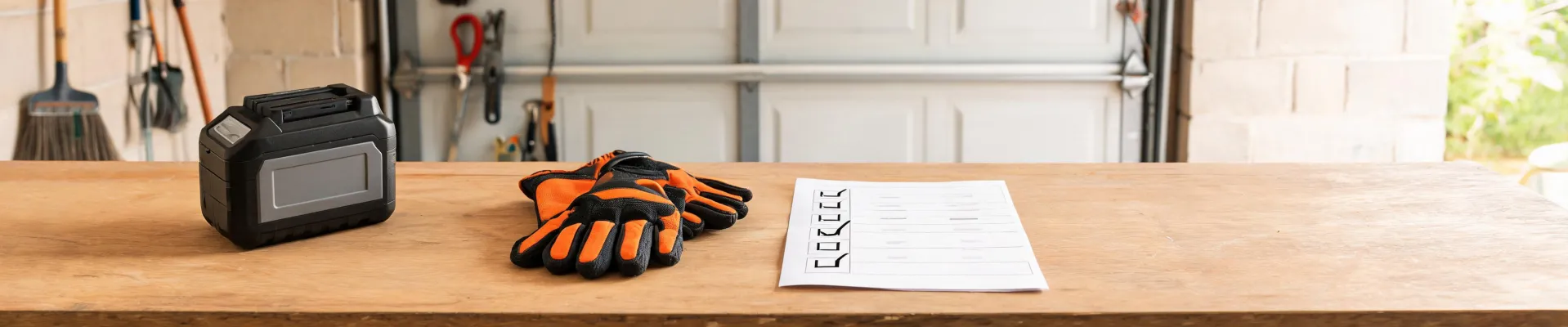
I built a pre-order checklist the following month. It's one page. Anyone who writes a purchase order over $500 has to initial each line.
The lines that would have caught this week:
- Is the item load-bearing or torque-bearing? Pliers, straps, cabinet locks, drawer slides. If yes, price isn't the first question. The spec sheet is.
- Does the application involve incidental heat or dry running? Pumps, motors, compressors. Check the manual for the operating envelope before answering a customer question.
- Is there a "heavy duty" claim with no test behind it? Look for a standard, not an adjective. For storage units, ANSI/BIFMA X5.9-2019 defines the tests for load, cycle, and stability. For pumps, the Hydraulic Institute's standards cover dry-run limits. For anything exposed to water or dust, IEC 60529 IP ratings tell you what the enclosure actually does — IP54 and IP68 are not the same promise.
- Do I have 15 minutes to compare two quotes? If the answer is no, the order waits until I do. A one-hour delay on an order is cheaper than a three-day delay on a job.
I still buy cheap where cheap is the right tool. At least, I try to. Cheap gear can work — for light duty, for one-off jobs, for anything that doesn't bear load and doesn't run hot. The question isn't whether cheap is bad. It's whether this specific item is one where cheap becomes expensive later.
The most useful thing anyone told me that week came from Ray, and it wasn't a recommendation. It was a demonstration. He didn't say "buy Stack-On products." He opened a cabinet that had been rained on for three years and let the drawer slide speak for itself.
The pump still bothers me. That one wasn't a purchase mistake — it was an information mistake. I answered a technical question with a shrug, and a crew paid for it with a burnt-up motor and a lost weekend. I keep the dead pump's thermal switch on my desk now. Not as decoration. As a reminder that "should be fine" is not an operating range.

Koji Sakamoto
Koji Sakamoto is an independent pneumatic tool and compressor analyst covering air compressors, impact wrenches, air ratchets, nail guns, and general air-tool systems. He applies ISO 11148 safety requirements while evaluating working pressure, free-air delivery, air consumption, hose loss, duty cycle, fastener capacity, vibration, noise, lubrication, and moisture control. His application guides help workshops and contractors size air supplies, compare tool output, and prevent performance losses caused by undersized or poorly maintained systems.