I coordinate emergency equipment procurement for a commercial landscape and hardscape supplier. I've handled 300+ rush orders in nine years, including same-day turnarounds for municipal and property-management clients after storms. That job changes how you look at outdoor power equipment. You stop asking which tool is best on a spec sheet and start asking which one gets the job done when the clock is already against you.
So let's compare two approaches for emergency landscape work: the EGO 56V cordless platform, especially the ego chainsaw 20, versus gas chainsaws. I'm using five dimensions: response time, maintenance and fleet readiness, cutting throughput, procurement and support, and total cost. No perfect winner. Just a clearer choice.
1. Response Time: EGO vs Gas
For emergency work, the first advantage of EGO is simple. Pull the trigger. No choke, no priming, no fuel mix. If your crew is moving between five storm-damaged properties before noon, that matters.
Gas saws can be fast too. A pro who runs a gas saw every day can start it in seconds. But cold starts after sitting in a truck overnight? That's where the time goes. And honestly, fuel handling in freezing rain is nobody's favorite job.
It took me three storm seasons and roughly 40 emergency orders to understand that battery platforms win not on raw power but on logistics. Fewer steps before the first cut. Fewer reasons for a crew to stand around.
Minutes matter. So does momentum.
Edge: EGO for rapid response across multiple small-to-medium jobs. Gas for a single saw that needs to start and run all day.
2. Maintenance and Fleet Readiness
EGO removes a lot of fuel-related maintenance. No carburetor rebuilds. No stale gas. No oil mix. But it is not maintenance-free. Batteries need charging, storage discipline, and rotation. That's the trade.
Gas saws need fuel stabilizer, spark plugs, air filters, and seasonal attention. None of that is hard, but it adds up across a fleet.
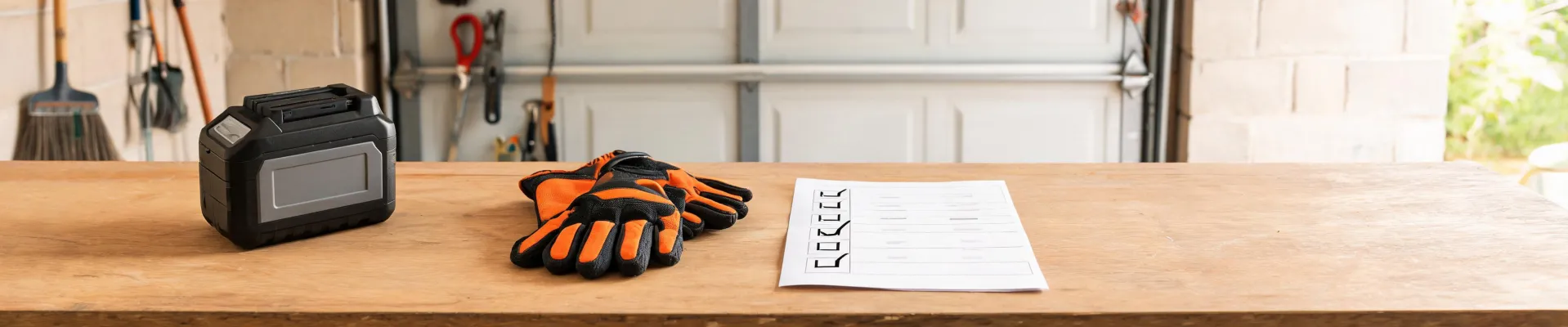
We didn't have a formal battery rotation process. Cost us when a crew grabbed three uncharged packs during a rush. The third time it happened, I finally created a color-coded charging checklist. Should have done it after the first time.
Edge: EGO if you can manage batteries. Gas if you prefer fuel energy and already have gas maintenance routines.
3. Cutting Throughput and Battery Reality
The ego chainsaw 20 is a good example of where the platform shines. It is quiet, low-vibration, and easy to start. For limbing, pruning, and storm cleanup, it can keep up with a small gas saw. For heavy bucking, battery choice matters. A 5.0Ah pack gives you a solid work window. A bigger pack extends it, but adds cost and weight.
Gas still wins on continuous runtime. You can refuel in two minutes and keep cutting. If you're dropping large hardwoods all day in 20°F, gas may still be the practical choice. That's not a knock on EGO. It's just physics and logistics.
If you've ever wondered who makes ego lawn mowers, the answer is Chervon, the manufacturer behind EGO Power+. The bigger point is that EGO mowers, chainsaws, trimmers, blowers, snow blowers, and pressure washers share the 56V platform. One battery ecosystem is the real advantage for a B2B fleet.
As of April 2026, EGO 20-inch chainsaw kits and bare tools vary widely by battery configuration and retailer. Verify current pricing at Ace or an authorized dealer. Don't assume last quarter's quote still holds.
Edge: EGO for mixed crews and moderate cutting. Gas for all-day heavy cutting in extreme conditions.
4. Procurement, Channels, and Support
For emergency buyers, availability beats almost everything. You can find chainsaws at ace hardware in many markets, and Ace is an authorized EGO retailer in many areas. Inventory varies by store, so call ahead. As of April 2026, verify current stock and pricing through Ace's store locator or an authorized EGO dealer.
That local channel matters. If a saw goes down during a rush, a replacement across town is worth more than a lower price that ships next week. EGO's warranty and support network are also part of the value, especially when you're standardizing a fleet.
Smaller emergency tools are worth planning too. An electric stapler nail gun manual search usually means one of two things: a manual staple gun for board-up and temporary repairs, or a cordless electric stapler or nailer for faster repeated fastening. For board-up, manual is simple and reliable. For trim and finish work, cordless is faster. Don't confuse the two when you order.
Hardscape repairs come up on the same emergency calls. If you need to trim a damaged paver, how to cut pavers with an angle grinder is straightforward: mark the cut line, use a diamond blade, score once, then cut in shallow passes. Use water or a dust shroud, and let the tool do the work. Don't force the blade.
Edge: EGO if you can source locally and standardize on 56V. Gas if your current supply chain already stocks fuel and parts everywhere.
5. Total Cost and the Honest Limitation
Upfront, EGO can look more expensive because batteries and chargers are part of the system. Gas saws can look cheaper at the register. But total cost includes fuel, oil, maintenance, downtime, and replacement cycles. For a crew already on the EGO 56V platform, the math changes fast.
Here's my honest limitation. I recommend EGO for municipal crews, property maintenance, storm cleanup across multiple sites, noise-sensitive areas, and buyers who already run 56V batteries. If you're a logging crew, run saws eight hours straight in extreme cold, or have no charging infrastructure, gas remains a better fit.
I went back and forth between a full EGO transition and keeping gas as primary for two months. EGO offered lower maintenance and easier starts; gas offered unlimited runtime. Ultimately, we chose a mixed fleet. EGO for 80% of calls, gas for the heavy stuff. That was the least risky decision.
Bottom line: The question isn't which is best. It's which failure mode you can tolerate. For most B2B landscape and hardscape emergency work, EGO is ready. For the heaviest continuous cutting, gas still earns its place.

Amara Nwosu
Amara Nwosu is an independent hydraulic tool and pump systems analyst covering jacks, cylinders, pullers, torque wrenches, hand pumps, power pumps, and porta-power equipment. She applies ISO 4413 safety principles while examining rated pressure, cylinder force, stroke, oil volume, flow, return type, hose condition, load holding, pressure loss, and relief protection. Her technical guides help maintenance and construction teams configure compatible systems, verify safe capacity, and diagnose slow or unstable operation.