-
Why I look at used EGO tools this way
-
Check the battery before you fall in love with the deck
-
How to register EGO lawn mower ownership and why it matters
-
The cheapest used EGO mower isn't automatically the best value
-
Demolition hammer parts, circular saw manual, and chain hoists: same quality logic
-
When a used EGO lawn mower is not the right call
If you're looking at a used EGO lawn mower, check the battery and registration before you check the price. A used EGO mower can be a smart buy—but only when the battery has real service life left and you can prove the unit's history. Skip those two steps and you're not saving money. You're buying someone else's expensive problem.
That may sound like an obvious answer, but I've watched plenty of buyers start with the deck and blade. On a battery-powered mower, the battery is the largest single component cost. A used EGO mower with a worn-out lithium pack is not a bargain. It's a future repair bill.
Why I look at used EGO tools this way
I'm a quality and brand compliance manager in the outdoor power equipment industry. I review products before they're approved to ship—roughly 200+ units each year. In a typical year, I reject about 11% of first deliveries for small but expensive issues such as mismatched labels, missing safety parts, or incorrect torque specs. That job has taught me a simple habit: verify before you value.
It also took me a few years to understand that on cordless equipment, the motor is rarely the weakest link—the battery is. The motor tells you what the tool is capable of. The battery tells you whether it can still deliver that capability. That's why used EGO mower questions should center on the battery and ownership record.
Check the battery before you fall in love with the deck
Start with the serial number. The serial number gives you the production date and the correct part diagrams; it also helps EGO support tell you whether the product is still eligible for service. If a seller won't send you a serial number before you come, treat that as a warning sign. I do not mean every seller is hiding something. But 'trust me' is not a verification checklist.
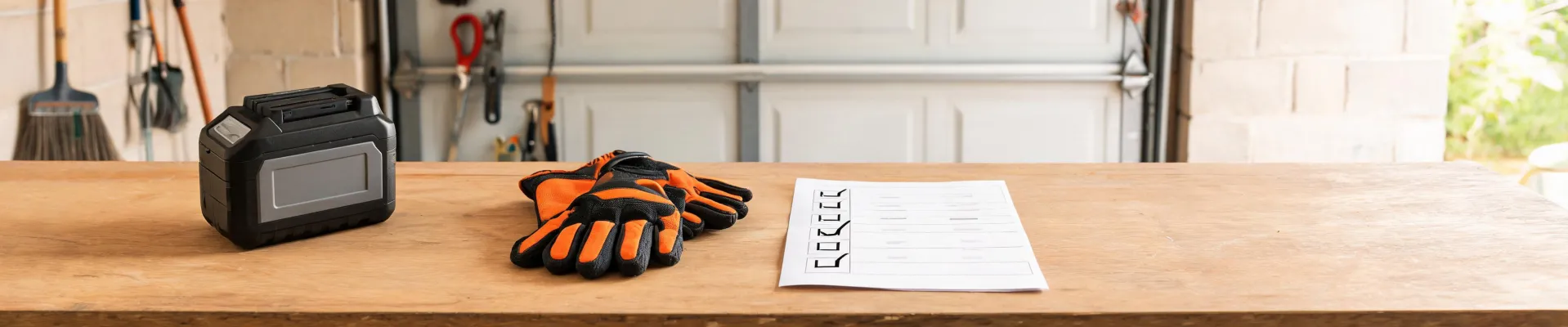
Then ask about the battery. Ask how old it is, how many charges it has seen, and whether it has ever been stored fully dead. Ask to run the mower for at least ten minutes under load. If the pack gets hot, if the mower stalls in thick grass, or if the battery case is swollen, stop. Walk away. That's it.
Here's the thing that usually surprises people: a battery can still start the mower and still fail halfway through the yard. Starting and cutting are not the same. If the seller lists the mower as 'runs great' or 'battery holds a charge,' check it the way you would check any advertised spec. Per FTC guidelines (ftc.gov), claims in ads should be truthful and substantiated. I'd rather verify a claim in the seller's driveway than argue about it later.
How to register EGO lawn mower ownership and why it matters
Registration is more than a warranty card. It creates a record that ties you to the product. If the purchase checks out, go through the official EGO site to register EGO lawn mower ownership as soon as possible. Keep the receipt, serial number photo, and battery model somewhere you can find.
Why does this matter? If you need a service part or a warranty consideration later, the registration and proof of purchase answer the first questions. Without them, you may be left relying on a hand-written note from a stranger. I've seen that scenario end in frustration. It is not about EGO being difficult; it is about how any manufacturer can verify history when records are missing.
The cheapest used EGO mower isn't automatically the best value
My position is simple: value is not the same as a low price. I'm not saying expensive is always better. But in every purchase decision—especially with used equipment—look at total cost. Add the likely cost of a battery replacement, missing parts, skipped maintenance, and your time. The lowest price in a search result often becomes the highest cost after those lines are added.
An example: a heavily used EGO mower with a four-year-old battery might be available for half the price of another listing with a newer battery. The older mower isn't cheaper if the battery swap costs almost as much as the difference. I've seen this pattern repeat across categories, not just EGO. In procurement language, it's called total cost of ownership. In plain English: don't let a low upfront number hide a larger total number.
Demolition hammer parts, circular saw manual, and chain hoists: same quality logic
The searches around demolition hammer parts, circular saw manual, and how to operate a chain hoist may seem unrelated. But they all point to the same principle: ask for the documented answer before you act.
I'm not a demolition hammer specialist, so I won't recommend a specific part without a model number. What I can say is that replacement demolition hammer parts should come from the manufacturer's parts diagram, not from a generic bin. I'm also not a rigging trainer, so if you're searching 'how to operate a chain hoist,' the responsible answer starts with the hoist's manual, load rating, and an inspection before every lift—not with a forum shortcut. And if you need a circular saw manual for a used saw, download the manufacturer's version before you make the first cut. That is the same behavior you need after buying a used EGO lawn mower: check the manual, check the condition, check the parts list.
When a used EGO lawn mower is not the right call
I want to be honest about boundaries. I'm not a warranty administrator, and I don't know the exact eligibility for every unit. If you find a used EGO mower with no receipt and a serial number that doesn't match the model label, or a battery pack that's too old to support the runtime you need, that unit may not be right for you. That doesn't mean EGO is bad. It means verification failed.
I also won't tell you battery-powered equipment is always better than gas or corded tools. For continuous commercial work, heavy-duty gas equipment still has its place. For small jobs, corded tools can be simpler. My point isn't to push one power source. It's to keep the quality mindset consistent: verify facts, keep records, and avoid hidden costs.
If the seller can't show a serial number, won't answer battery questions, or just says 'trust me,' let that one go. There will be another used EGO lawn mower. Your money is better spent on a unit that can prove its story.

Maren Jorgensen
Maren Jorgensen is an independent hand tool and torque applications analyst covering wrenches, pliers, screwdrivers, hammers, sockets, ratchets, hex keys, and tool sets. She applies ISO 6789-1 torque-tool conformance principles while examining jaw capacity, leverage, fastener engagement, torque range, accuracy, handle geometry, and material hardness. Her practical guides help tradespeople and procurement teams select suitable tools, plan controlled tightening, and compare durability without relying on brand reputation alone.