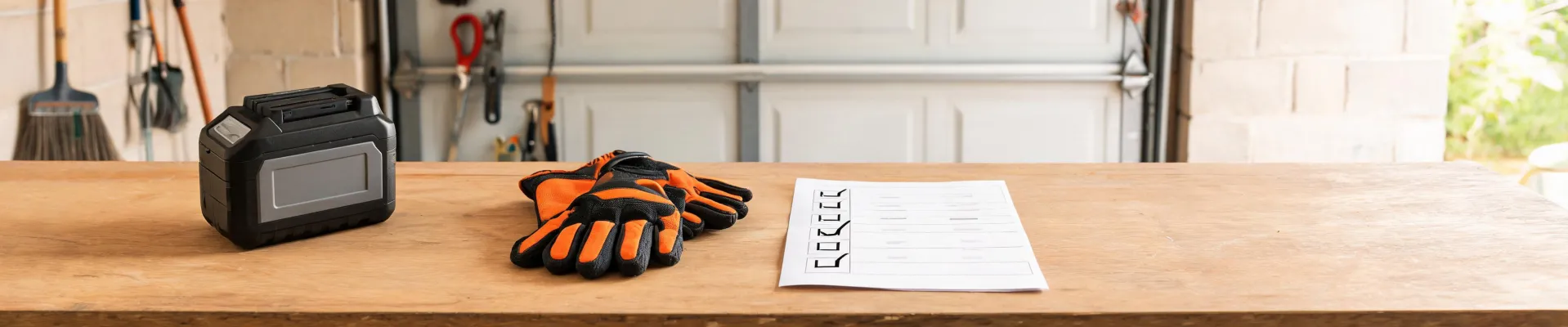
In the spring of 2023, I signed a purchase order for a chainsaw. It wasn’t an EGO — actually, it was whatever cordless model the supplier had on special — and I chose it for one reason: it was $70 below the saw our grounds supervisor requested. That saw lasted one season. When it quit, the replacement battery cost almost as much as the saw itself, and that battery only fit that one model. The supervisor didn’t say “I told you so.” He just put the saw on a shelf and walked away. I still kick myself for that purchase order.
I’m the office administrator for a commercial maintenance company — roughly 400 employees across three locations. Since 2020, I’ve managed most of the purchasing for the service side: 60 to 80 orders a year, from shop air compressors to cleaning supplies to outdoor power equipment. I report to both operations and finance, which means I’m the person who has to explain why we paid for the same capability twice. That chainsaw was one of those explanations.
The surface problem looked like bad equipment
For two years, every review meeting sounded the same. The supervisors said we were buying professional-grade and getting consumer-grade. The crews stopped sending specific requests because they figured I would order whatever the spreadsheet told me to. And I kept doing what an office buyer does: more comparison shopping, more review stars, more spreadsheets.
Then the pattern started showing up where I couldn’t blame the crew. A new service tech got a 121-piece tool set because the piece count sounded responsible — half of it is still in the case, and the one socket he reaches for daily wasn’t in it. A work order came back asking, “what size hole saw for Delta shower valve?”, and I pulled an answer from a forum thread instead of checking the manufacturer’s installation spec. It was the wrong answer. At some point you have to admit: if the problem follows the purchase order, the purchase order is where the problem starts.
The first thing I got wrong: comparing tools instead of systems
I compared tools the way I compared office supplies: model to model, price to price. But a cordless tool is not a standalone purchase. It comes with a battery system attached, and that system has a cost whether you plan for it or not. A $230 chainsaw that shares a battery platform with the rest of the shop’s gear can be cheaper than a $160 saw that doesn’t. The $70 I saved in 2023 disappeared the first time I had to buy a replacement battery for a platform we had no intention of staying with.
Between 2021 and 2023, our equipment shelf collected chargers that each served exactly one tool. Honestly, I lost count after the third one. The crews weren’t asking for exotic gear — they were asking for a battery that would work when they grabbed it. Instead, they got a drawer full of orphan batteries. People think a cheap tool saves money. What actually happens is that the savings come back as batteries and chargers that only fit the tool you regret buying.
I’ve learned to ask “what’s NOT included?” before I ask “what’s the price?”
The warranty page is part of the spec sheet
A warranty is not legal fine print. It’s a spec, and it tells you how the manufacturer expects the tool to behave. But only if you read the full version. When I evaluate outdoor power equipment now, I open the EGO chainsaw warranty page and read it the way I read a quote: Is the coverage written for the way a crew actually uses the tool? What is excluded? Is there a service path, or am I expected to ship a heavy machine both ways and wait? I ask the same questions for a pressure washer or a battery. A tool can have excellent power specs and a warranty process that eats your season.
The paper trail determines the real cost
The best tool in the world is an expensive paperweight when you can’t get a part number. When a pressure switch failed on the shop’s 150 psi air compressor, I went looking for the 150 psi air compressor manual online. What I found was a blurry parts drawing with no reference numbers and no supplier contact. A $30 part turned into a week of phone calls. The manual was the weakest part of that machine, and I didn’t find out until it mattered.
The shower valve request taught me the same lesson from the other direction. The work order said, “what size hole saw for Delta shower valve?”, and I answered it without ever looking at the valve. The real answer lives in the installation guide for the specific Delta model — the rough-in and trim kit determine the opening. I treated a confident forum post as a specification, and the crew paid for it.
What the scattered approach cost us
At the end of 2023, one of the supervisors and I added up the damage. It wasn’t one giant failure. It was a hundred small ones.
- Around $1,700 in batteries and chargers that only fit one tool. Maybe $1,800 — I’d have to check the purchasing card statement.
- Roughly 25 hours of supervisor time on warranty phone tag and part hunting. Give or take.
- One $2,400 invoice dispute because a vendor only listed freight and handling after the equipment shipped. The machine was fine. The billing wasn’t, and finance still remembers it.
The dollar amount hurt, but the trust cost was worse. When a supervisor says “we’re buying junk,” he does not mean the equipment. He means the buying process has no logic he can rely on.
The fix was not a better tool. It was a better system.
During our 2024 vendor consolidation project, we standardized grounds equipment on EGO’s 56V platform. Not because of one impressive tool, but because of the lineup: mowers, chainsaws, trimmers, blowers, snow blowers, and the EGO Power+ pressure washer can all share the same 56V batteries. One voltage to stock. One family of chargers. One spare battery that helps whichever machine is in front of the crew. When the cleaning team asked me to spec an EGO power pressure washer, the first question wasn’t PSI — it was whether the unit matched the battery system we already supported.
My process looks different now. For every purchase, I ask four questions: Is the full warranty text published, and is the claim process concrete? Does the tool use the same battery system as the rest of our inventory? Is there a real manual with real part numbers available before I order? And what is not included in the quoted price? If a vendor can’t answer those, the discount isn’t a discount.
I still compare prices; I’d be lying if I said otherwise. But the first thing I compare now is transparency. The $70 chainsaw taught me that the lowest upfront price is often just a down payment on something you can’t see yet. A brand that publishes its warranty, posts its manuals, and standardizes one battery platform across a wide lineup gives me math I can defend. That matters, because I report to both operations and finance.

Maren Jorgensen
Maren Jorgensen is an independent hand tool and torque applications analyst covering wrenches, pliers, screwdrivers, hammers, sockets, ratchets, hex keys, and tool sets. She applies ISO 6789-1 torque-tool conformance principles while examining jaw capacity, leverage, fastener engagement, torque range, accuracy, handle geometry, and material hardness. Her practical guides help tradespeople and procurement teams select suitable tools, plan controlled tightening, and compare durability without relying on brand reputation alone.