I'm the office administrator for a 180-person property services company. I handle all our tool and equipment purchasing—roughly $85,000 a year across 8 vendors. When we made the switch to cordless outdoor gear in 2023, Ego was the platform we settled on. Since then, I've answered a lot of questions from our crew leads and even from other buyers. Here are the ones that keep coming up.
- What's the best way to store Ego tools and batteries?
- Does Ego make tillers?
- How do I read a chainsaw size chart?
- What are brake spring pliers and when do I need them?
- Which is better: a drill or an impact driver?
- Why did we standardize on Ego's 56V platform?
What's the best way to store Ego tools and batteries?
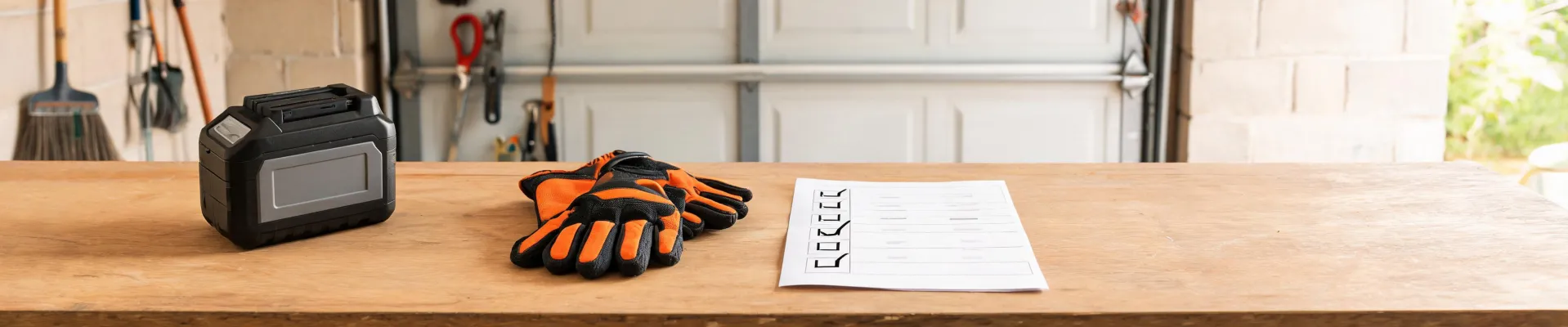
Short answer: keep them dry, keep the batteries at room temperature, and get everything off the ground. We use a tall steel shelving unit in the equipment closet (one from a local racking supplier, not Ego-specific) plus a wall-mounted tool organizer for the hand-held pieces. The batteries stay on a shelf with a power strip for charging cycles, never on concrete. That's the one rule our Ego rep drilled into us (note to self: still haven't labeled the shelves, but it's on the list).
I don't have hard data on whether cold concrete hurts battery capacity long-term, but after three winters it seems to help. We also tuck the batteries into a plastic bin with a lid when temps drop below freezing. I've seen people store batteries in a shed over winter—ugh, still a no-go. We bring them inside.
Does Ego make tillers?
Yes. They've got a 56V cultivator/tiller in the Power+ line. We added one last spring for the flower beds and small garden plots at two properties. It's not a replacement for a full-size rear-tine tiller on heavy sod—that's where gas still wins (honestly). But for prepping an existing bed, it's light enough for one person to carry and it starts every time, which is the part our crew appreciates most.
The "gas is always more powerful" thinking comes from an era when battery tech was genuinely weak. That's changed for 90% of our tasks, but I'll admit I didn't believe it until we ran one head-to-head against an old gas model. The ease of not mixing fuel and no pull-cord is a quieter win that shows up in crew productivity.
How do I read a chainsaw size chart?
Chainsaw size is determined by bar length, which tells you the maximum log diameter you can cut. A 12-inch bar handles 6–8 inch diameter branches, according to Oregon's chain application guide (oregonchain.com, accessed April 2026). 14–16 inch bars cover most firewood and small tree work. 18–20 inch bars are for larger felling, and 24+ inch bars are for professional use.
- 10–12 inches: pruning, small branches
- 14–16 inches: firewood, medium trees, general ground work
- 18–20 inches: larger felling, occasional big cuts
- 24+ inches: commercial felling, not for daily crews
For our crew, we standardized on 16-inch Ego chainsaws for ground work and a 20-inch for occasional larger removals. I wish I had tracked hours more carefully to give you exact performance numbers, but anecdotally, the 16-inch has been the right sweet spot for us.
What are brake spring pliers and when do I need them?
Brake spring pliers are a specialty tool designed to safely compress and install the return springs on drum brakes. You won't need them for weedeaters or mowers (surprise, surprise). They belong in the automotive repair kit. We keep one pair in the garage because we do light maintenance on our own trucks, but honestly a pair of regular needle-nose pliers can work in a pinch if you have the patience.
The assumption is that every shop should have a full set of specialized pliers. The reality is that for a nonspecialist, they only earn their keep if you're pulling brake drums on a regular basis. In three years, we've used ours twice. If you're ordering for a general maintenance crew, put that money toward a second battery instead.
Which is better: a drill or an impact driver?
Neither one is universally better—they do different jobs. A drill gives you variable speed and a chuck that holds any bit, so it's the tool for boring holes. An impact driver adds rapid rotational impulses, making it much faster at driving long screws into dense wood. For decking, our crews grab the impact driver first. For installing a hinge, the drill is fine.
The "you only need one" mindset comes from a time when impact drivers were niche. Today, cordless impact drivers are almost as common as drills, and many brands sell them as a kit. If you run a tight budget, a drill is more versatile; if you can get both, that's the move.
Why did we standardize on Ego's 56V platform?
Because one battery platform means fewer chargers, fewer spare batteries, and less training time for staff. In 2023, we switched from a pile of mismatched gas tools to Ego's 56V line for mowers, chainsaws, trimmers, blowers, and snow blowers. The warranty support has been solid, and I can call one number for parts. That consistency matters more than any single tool's specs.
That said, I don't consider Ego the right choice for every crew. If you're clearing acres every day, gas or a commercial cordless line from another major brand might make more sense. But for a mid-size property company, the 56V platform has held up well over three seasons. The fundamentals haven't changed—matching tool to task—but the execution has transformed for the better.

Maren Jorgensen
Maren Jorgensen is an independent hand tool and torque applications analyst covering wrenches, pliers, screwdrivers, hammers, sockets, ratchets, hex keys, and tool sets. She applies ISO 6789-1 torque-tool conformance principles while examining jaw capacity, leverage, fastener engagement, torque range, accuracy, handle geometry, and material hardness. Her practical guides help tradespeople and procurement teams select suitable tools, plan controlled tightening, and compare durability without relying on brand reputation alone.