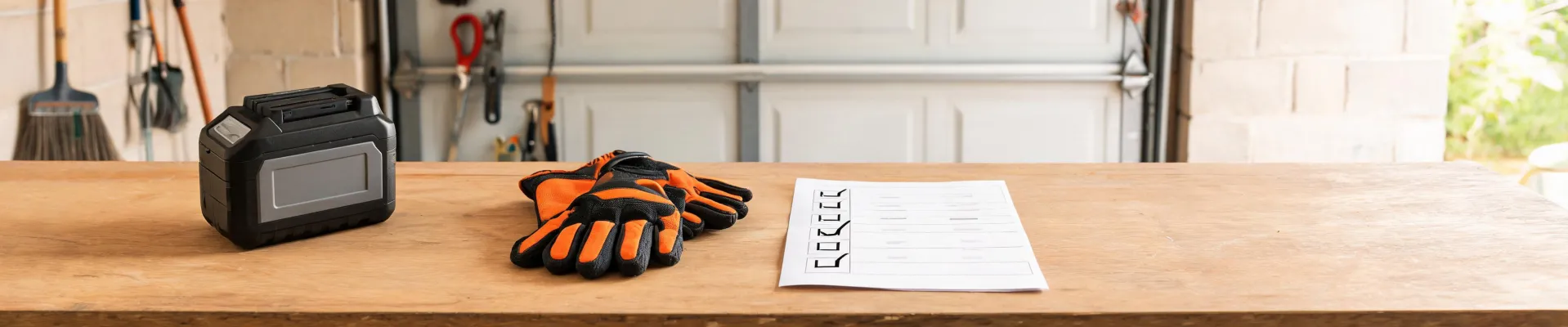
I'm the office administrator for a 65-person facilities company. I handle all maintenance and tool ordering—roughly $190,000 in annual purchase volume across 12 vendors, and I report to both operations and finance. The requests in my inbox are usually short: We need a new blower or We're out of screwdrivers—or the one that makes me stop and read carefully: Can you put a saw blade on an angle grinder?
Here's the truth: there is no universal answer to any of those questions. The right tool depends on who's using it, what they're doing, and how the purchase fits into the rest of the tool cabinet. So let me walk you through the scenarios I actually deal with, the mistakes I've made, and the checks that have saved me from doing it again.
Start with the rule that saves me from myself
When I took over purchasing in 2020, I thought buying tools was basically about finding a good price and a fast delivery date. Then I ordered what looked like a complete metric socket set, and the crew found out it didn't include deep-well sockets. That meant an emergency order, a second set, and a late afternoon spent answering the same question over and over: Who bought this?
That's when I became a checklist person. Five minutes of verification beats five days of correction. A checklist is the best insurance a buyer can have. It sounds boring, but it prevents the expensive kind of curing after the fact.
The three scenarios I actually get asked about
Scenario 1: Shopping deals on an EGO cordless snow blower (or reading EGO lawn mower reviews)
Okay, the fun one first. When someone sends me a link and says, Can we shop deals on EGO cordless snow blower models? I don't start with the price. I start by asking what the snow blower will actually clear. Is it a 50-foot walkway or a parking area? Is it usually dry, heavy, or wet snow? Does the building owner have a preference for quiet operation at early hours? Those answers change the recommendation.
If you're reading EGO lawn mower reviews, the same logic applies. Look for patterns, not star ratings. A one-star review about a dented cardboard box usually isn't a product flaw. Ten comments about the same battery issue? That's worth a spec check. I don't have hard data on nationwide defect rates, but based on five years of ordering outdoor power equipment, my sense is that verified reviews and repeat purchasers tell you more than the average score.
Compatibility is the real deal-maker. EGO's core cordless product line runs on a 56V battery platform. Many EGO tools share that platform, so a battery from a trimmer may work in a blower or mower. That can make a discounted bare tool a much smarter buy. But if you're comparing different products that don't use the same battery platform, today's discount can become tomorrow's extra purchase. Verify the battery system on the manufacturer's official site before you order.
Honestly, this is also where I've learned to be careful about time pressure. Last November, I had roughly two hours to approve a snow blower order before a vendor promo expired. Normally I'd get three quotes and check specs over a couple of days. There was no time, so I went with a supplier we'd used for years, based on trust alone. It worked out. But in hindsight, I should have pushed back on the deadline. Even a good decision made under pressure is still a gamble.
Scenario 2: Stocking a maintenance drawer with screwdrivers and a metric socket set
Then there are the less glamorous requests: We need screwdrivers or Do we have a socket set metric or standard? I used to order whatever had the highest rating, which is how I ended up with a drawer full of duplicates that nobody wanted. Now I make the buyer's version of a spot check.
Take a model like the cushion grip screwdriver set MT200-4. It's a reasonable general-purpose set, and I've seen it on supplier lists for office maintenance kits. But it's only the right answer if your crew works on fasteners that match the set's Phillips, flat, Torx, and hex sizes. If you have a bench that maintains electronics, you may need precision drivers. If you have a mechanic who reaches into tight spots, you may need long-reach ratcheting drivers. The set itself isn't the point; the fit to your actual fasteners is.
Same story with sockets. Metric or standard? is not the first question. The first question is: What equipment are we maintaining? Most modern outdoor power equipment and imported machinery use metric fasteners. Older U.S.-built equipment often uses SAE. If your facility is mixed, a dual set or a metric socket set plus a few SAE sizes might be the practical answer. If your shop is almost all metric, a metric-only set is usually easier to store, cheaper, and less confusing. But don't guess. Walk the maintenance area and check the service manuals.
The prevention habit here is simple: before you order, list the tip types and socket sizes you already own. If the new set duplicates what's in the drawer, it's not a deal. If it fills the missing sizes, it's worth the money.
Scenario 3: Can you put a saw blade on an angle grinder?
Now the one that scares me. Once or twice a year, someone asks me directly: Can you put a saw blade on an angle grinder? The short answer is no. Don't do it. I'm not saying that because I'm a nervous office manager. I'm saying it because the speeds don't match and the guard isn't designed for toothed wood blades.
A typical 4-1/2-inch angle grinder spins at a no-load speed around 10,000-11,000 RPM. A 7-1/4-inch circular saw blade is designed to run at a much lower RPM—often around 7,000 or less. Put that blade on a grinder, and you're spinning it far above its rated speed. That can lead to binding, kickback, or worse. According to OSHA's abrasive wheel machinery standard (29 CFR 1910.215), abrasive wheels need appropriate guards and flanges. According to ANSI B7.1, an abrasive wheel's maximum operating speed must be checked against the grinder's spindle speed. A saw blade on an angle grinder doesn't fit any of those safeguards.
If someone needs to cut wood, buy a circular saw, a reciprocating saw, or a jigsaw. If the job is metal and they're using a grinder, use an abrasive cutoff wheel rated for that grinder's no-load speed. And before mounting any wheel, check the RPM printed on it. If the wheel's max speed is lower than the grinder's no-load speed, it doesn't go on that grinder. No exceptions. This is the prevention-over-cure rule applied literally: a five-minute check beats an incident report.
How to tell which scenario you're in
Here's the part that most buying guides skip. If you're not sure which scenario fits, work through these four questions:
- Who is using it? The operator's feedback matters more than the marketing page.
- What specific job will it do? Snow blower isn't a spec. Clear 100 feet of concrete walkway, including a ramp, in wet snow is a spec.
- What else is in the toolbox or battery charger? Compatibility can be worth more than the upfront price.
- What are the safety ratings? Speed ratings, guard requirements, and battery system compatibility are not optional.
If you can't answer all four, you're not ready to order. That's not a reason to delay; it's a reason to ask one more question. Ask the person who will use the tool. Check the service manual. Verify the standard. Taking those steps upfront is the difference between buying once and buying twice.
Bottom line
The best tool isn't the one with the biggest discount. It's the one that fits the person, the job, and the safety requirement. If you know the scenario, the right choice gets a lot clearer. If you don't, that's when the rework starts.
In our 2024 vendor consolidation project, I cut our supplier list from eight down to five. One of my criteria was simple: can they provide line-item specs and a proper invoice? That came from an earlier mistake with a vendor who only gave me a handwritten receipt and cost the department $2,400 in a rejected expense report. I've made enough of those mistakes to trust the checklist now. And for me, that checklist starts with the same thing every time: prevention over cure. It sounds dull, but it gets the snow cleared, the drawers stocked, and everyone home safe.

Maren Jorgensen
Maren Jorgensen is an independent hand tool and torque applications analyst covering wrenches, pliers, screwdrivers, hammers, sockets, ratchets, hex keys, and tool sets. She applies ISO 6789-1 torque-tool conformance principles while examining jaw capacity, leverage, fastener engagement, torque range, accuracy, handle geometry, and material hardness. Her practical guides help tradespeople and procurement teams select suitable tools, plan controlled tightening, and compare durability without relying on brand reputation alone.