The lowest unit price is rarely the lowest total cost
If you're buying tools, parts, or consumables for a B2B operation, the cheapest line item is usually not the cheapest decision. I've managed tool and MRO budgets long enough to say that plainly. I'm a procurement manager at a 180-person landscape and industrial services company. I've managed our equipment and MRO budget—about $240,000 annually—for seven years, negotiated with 40+ vendors, and logged every order in our cost tracking system. The invoices that hurt us most were rarely the big ones. They were the bargain orders that turned into battery shortages, emergency freight, or rework.
That's why I use total cost of ownership (TCO) before I approve almost anything. Unit price is just the first line. TCO is unit price plus freight, setup, batteries, chargers, consumables, downtime, rework, warranty gaps, and risk. If you skip those lines, you're not comparing vendors. You're comparing fiction.
Argument 1: The bare-tool trap is real
If you've ever approved a bare-tool PO only to realize nobody checked the battery platform, you know the sinking feeling. In my first year, I made the classic rookie mistake: I assumed tool only meant the same thing to every vendor and every crew. Cost me about $600 in adapters, plus a week of downtime because the batteries we had wouldn't run the new saw.
Take an EGO chainsaw tool only quote. The bare tool looks great on a spreadsheet. But if your crews don't already have enough 56V batteries and chargers, that lower number is not the real number. Add two batteries, a charger, and maybe a second battery for longer storm cleanup, and the kit might actually be cheaper per crew. We ran that math in 2023. The bare tool saved $70 upfront. The kit saved $190 per crew after we factored in battery sharing and reduced swap time.
We also tested the EGO chainsaw 20 (20-inch bar) for limbing and storm cleanup. The saw itself was not the issue. The issue was whether we had enough batteries to keep two crews running through a full day. That's a TCO question, not a tool-only question.
Same story with a 20V circular saw 7 1/4. If your carpenters already run that battery platform, the bare tool can be a smart buy. If they don't, you're not buying a saw. You're buying a saw plus batteries plus chargers plus a new battery ecosystem. That's a way bigger commitment than the product page suggests.
Argument 2: Catalog parts hide the expensive lines
I went back and forth between a lower-cost 40 series ball valve catalog supplier and our usual distributor for two weeks. The low-cost catalog had a better unit price. Our usual distributor had better lead times and a local warranty process. On paper, the catalog made sense. My gut said the shutdown risk was too high. Ultimately, I chose the distributor because the valve wasn't for a spare bin—it was for a compressed air line that supports three crews.
The catalog price was one line. The real cost included freight, seal kits, compatibility checks, and the chance that a wrong valve would sit on a shelf while a line was down. We once saved $120 on a valve order and lost $1,400 in labor waiting for the right replacement. That's what I mean by hidden costs. They don't show up in the quote. They show up in the weekly ops meeting.
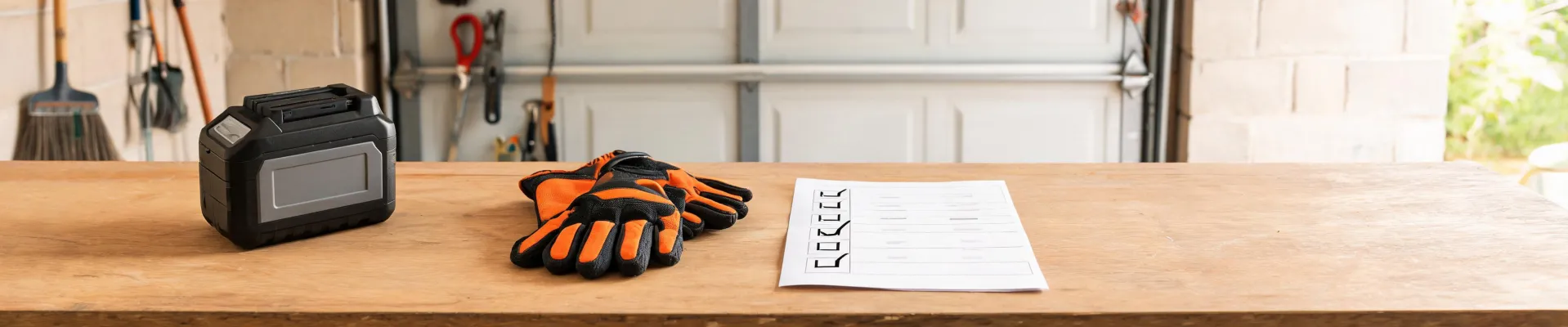
So now I use a simple TCO checklist for parts and tools:
- Unit price and freight
- Required batteries, chargers, adapters, or accessories
- Consumables and replacement parts
- Expected downtime if it fails or arrives late
- Warranty coverage and who handles the claim
- Training or safety requirements
- Resale or recycling value at end of life
That list isn't glamorous. But it has saved us a ton of money. In 2024, we cut emergency freight by 22% just by adding lead time risk as a line item before approving low-bid vendors.
Argument 3: Consumables and safety are TCO, too
Here's an unexpected angle: sometimes the cheapest consumable is the most expensive because it makes your team ask the wrong question. If a crew member is asking can a grinding wheel cut metal, the real cost isn't the wheel. It's the wrong wheel, the wrong technique, or a safety incident. A $4 grinding wheel can turn into a $4,000 workers' comp claim if it's used on the wrong material or without the right guard.
We had that lesson in Q2 2024. A supervisor grabbed a general-purpose wheel because it was in the bin. It cut metal, technically, but it loaded up, overheated, and scared the operator enough that he stopped the job. We lost two hours and had to redo the cut with the right wheel. The cheap wheel cost us way more than the right one would have.
That's why I don't let purchasing decisions live in isolation. A tool, a part, or a consumable is part of a system. Batteries, blades, wheels, valves, training, and support all connect. If you only optimize the line item, you're optimizing the wrong thing.
What about just taking the lowest bid?
I know the pushback. Procurement's job is to get the lowest price. I get it. I've been measured on savings, too. If two quotes are truly identical—same specs, same lead time, same warranty, same support—then yes, take the lower price. But in my experience, identical quotes are rare. There's almost always a difference in fine print.
Another pushback: TCO takes too long. Fair. I've been there. In Q2 2024, during storm season, I had two hours to approve a rush order for batteries and chainsaw parts. Normally I'd get three quotes and run the TCO sheet. There was no time. I went with our usual vendor based on trust alone. We paid more upfront, but we avoided a $3,000-per-day downtime cost. In hindsight, I should have kept a pre-approved backup vendor list. But with the constraint I had, trust was the best available data.
Here's what you need to know: TCO isn't about always choosing the most expensive option. It's about choosing the option with the lowest risk-adjusted cost. Sometimes that's the cheaper quote. Sometimes it's the one with better warranty support. Sometimes it's the one that keeps your crews running.
One more thing: verify claims. Per FTC business guidance on advertising, performance and warranty claims must be truthful and substantiated. So when a vendor says no maintenance or lifetime battery, ask for the documentation. Per FTC Green Guides (16 CFR Part 260), recyclable claims also need substantiation. That matters when you're comparing battery platforms for long-term disposal or replacement costs.
Bottom line: budget TCO, not sticker price
So no, I don't start with the lowest quote anymore. I start with the system: who will use it, what batteries or accessories they need, what happens when it fails, and what the downtime cost is. Then I compare quotes. That's how a $500 deal becomes an $800 mistake, and how a $650 all-inclusive quote becomes the cheaper choice.
If you're buying an EGO chainsaw tool only, price the batteries and chargers first. If you're sourcing a 40 series ball valve catalog, price the lead time and seal kits. If your team asks can a grinding wheel cut metal, price the safety and rework risk. Do that, and you'll stop chasing the cheapest line item. You'll start buying the lowest total cost.

Leila Farzan
Leila Farzan is an independent welding, abrasives, and cutting accessories analyst covering welders, electrodes, wire, grinding wheels, flap discs, cutting discs, drill bits, saw blades, hole saws, and router bits. She references ISO 525 abrasive-product dimensions and ISO 9606-1 welding qualification concepts while examining wheel speed, grit, bond, electrode class, duty cycle, kerf, tooth geometry, and material compatibility. Her guides help fabricators choose consumables, control process risk, and compare cut or weld quality.